This article features an interview with Dr. Gerald Pollack, conducted by Dr. Nemoto, an advisor to IHM and Office Masaru Emoto.
Guest: Dr. Gerald Pollack, Professor of Bioengineering, University of Washington.
Interviewer: Yasuyuki Nemoto, Advisor to IHM & Office Masaru Emoto.
Nemoto: I recently read your latest paper, “Cancer: An Unexpectedly Critical Role of Cell Water?” (Note 1).
I found it to be a remarkably fresh and vital perspective. Today, I’d like to discuss this research with you. Could you explain your findings in a way that is easy to understand, even for those without a background in this field?
Note 1: Pollack GH (2024) Cancer: An Unexpectedly Critical Role of Cell Water? Adv Prev Med Health Care 7: 1060.
Dr. Pollack: Thank you. I’ll do my best to keep it simple. Generally speaking, I prefer to think about things in simple terms. I believe that following a simple path leads us to the truth, whereas overcomplicating things only makes them harder to grasp.
Now, when it comes to cancer, it’s a disease that has been studied for a very long time. More than 50 years ago, President Nixon launched the “War on Cancer.” Yet, I don’t think we can say we’ve won that war just yet. I think the reason we haven’t succeeded is that many researchers believe cancer is so incredibly complex that it can never be fully defeated. But it’s possible that the direction they’ve been looking in is simply the wrong one. Until now, cancer research has focused almost exclusively on genetic mechanisms. Other aspects have largely been ignored.
It reminds me of a story about a man who lost his car keys. A police officer comes by and asks, “What happened?” The man says, “I lost my car keys.” The officer asks, “Are you sure this is where you dropped them?” The man replies, “Well, no, I might have dropped them somewhere else—but this is the only spot where the streetlights are on, so I can actually see what I’m doing!”
The same can be said for cancer research. There are countless studies on the genetic side because we have the tools to look there. But in other areas, we barely have a clue where to start.
Through our research into the “Fourth Phase of Water,” we realized there is another way to explain the mechanism of cancer. That is, by looking at how water acts inside our cells. We decided to approach it from this entirely different perspective.
Years ago, our research led to a discovery: the water inside our cells isn’t the ordinary liquid water we see every day. It’s water in a special state. We call this the “Fourth Phase of Water,” or “EZ Water” (Exclusion Zone Water) (Note 2). What we further discovered is that when a cell has enough EZ water, it functions correctly. However, if that amount decreases, the cell begins to malfunction, which can ultimately lead to disease. I’ll explain this concept in more detail in a moment.
Note 2: Dr. Pollack’s research has proven that when a hydrophilic (water-loving) surface is in contact with water, a layer of water with a special structure forms up to about 0.1 mm from the surface. When various particles are suspended in the water, they are pushed away from this layer, which is why it is called the “Exclusion Zone.” While the water outside this zone is “bulk water” (ordinary liquid), EZ water is more viscous—almost like honey. Because its physicochemical properties differ from solids, liquids, or gases, Dr. Pollack refers to it as the “Fourth Phase of Water”.
One of the main characteristics of cancer cells is how they divide and multiply. About 50 years ago, scientists were curious about what exactly triggers a cell to divide. They discovered that a key factor was the “electrical potential” inside the cell.
Let me explain. Normally, the electrical potential inside a cell—measured against the outside, which is zero—is about -60 to -90 millivolts. What these scientists found was that in cancer cells, this negative charge is much weaker (meaning it moves closer to zero). In fact, the internal potential of a cancer cell is often only about -10 to -15 millivolts. When the charge becomes that shallow, the cell starts to divide.
In other words, if the negative charge inside a cell is weak, cancer cells will keep on dividing. Conversely, if the cell maintains a deep negative charge, cell division does not occur.
Although these initial studies were conducted over 50 years ago, I wanted to see if modern research has confirmed those findings. My investigation led me to a review article that compiled results from about 50 different studies. Every single one of them reached the same conclusion: when the intracellular potential becomes “shallow” (moving toward zero), cell division occurs. Conversely, as long as the potential remains “deep” (a strong negative value), division does not happen.
This conclusion appears to be absolute. Even in healthy processes where cells must multiply—such as in a developing fetus (Note 3)—the intracellular potential was found to be in a shallow state. However, when the negative value is deep, cell division simply does not occur. This holds true across all experimental results (Note 4).
Note 3: Even in the healthy early stages of life—where a fertilized egg divides repeatedly to become an embryo and then a fetus—the intracellular potential is in a shallow state, similar to that seen in proliferating cancer cells.
Note 4: The following diagram (adapted from Yang M. and Brackenbury, Front Physiol. 2013) illustrates this concept. The left side of the central axis shows tumor cells, while the right side shows non-tumor cells. Red indicates proliferating cells, and blue indicates non-proliferating cells. It is clear that both rapidly dividing tumor cells and healthy dividing cells have shallow negative potentials. In contrast, cells that are not dividing maintain a deep negative potential.
What is Happening to the Water Inside the Cell?
Naturally, this leads to a question: “Why do different cells have different electrical potentials?” I believe the answer lies in the “Fourth Phase of Water.”
Healthy cells are filled with the Fourth Phase of Water, or EZ water. EZ water typically carries a negative charge. If a cell is filled with a substance that holds a negative charge, the cell itself will naturally have a negative potential.
Cells saturated with EZ water function normally and maintain a deep negative potential. On the other hand, in cells where EZ water is insufficient, the degree of negative charge decreases, causing the potential to become shallow.
Let’s look at this simply. Most biologists studying cells today don’t yet understand the link between negative potential and EZ water. This is because EZ water is a relatively recent discovery. From their perspective, a deep negative potential is created solely by the action of the cell membrane, and they believe it has nothing to do with the water inside the cell (Note 5).
Note 5: According to mainstream biology, the negative potential inside a cell is created by proteins called “ion pumps” and “ion channels” located on the cell membrane, which transport ions back and forth. While most scientists subscribe to this theory, Dr. Pollack proposes a groundbreaking alternative: the negative charge exists because the cell is inherently filled with EZ water.
So, why does EZ water become insufficient in cancer cells? Here is my answer.
EZ water has a unique characteristic: it builds up from a solid surface. Inside a cell, EZ water is created wherever water touches a solid structure—such as the surfaces of various proteins or the membranes surrounding organelles.
Imagine a carcinogen enters a cell and causes a genetic mutation. As a result, the structure of the protein encoded by that gene changes. Before the mutation, that protein might have naturally generated plenty of EZ water around itself. But once its structure is altered by the mutation, it may lose its ability to form EZ water. When the ability of protein surfaces to create EZ water changes due to genetic mutations or other factors, the electrical potential of the cell changes along with it (Note 6).
Note 6: Most researchers believe cancer starts when carcinogens damage DNA, causing mutations that change the function of proteins. If these proteins are involved in controlling cell division, the mutation can “trigger” division when it shouldn’t happen. As these mutated cells multiply, they eventually form a tumor.
How to Increase EZ Water
So, what can we actually do? The answer is simple: “Create more EZ water.” In my paper, I identified ten different ways to build up or increase EZ water. Having studied this for nearly a decade, we have made many discoveries regarding its structure.
The easiest method is simply to increase the amount of water you drink. The most basic reason for a decrease in EZ water is dehydration. As we age, our bodies tend to lose moisture. When the overall water content of the body drops, the EZ water—which is a part of that total—decreases as well. By replenishing your body’s water, you can correspondingly increase the amount of EZ water.

Second, to build up EZ water in the body even faster, drinking freshly squeezed vegetable juices is highly effective. Since plant cells are themselves filled with EZ water, you can absorb it directly from the source.
While human cells typically have an internal potential of about -60 to -80 millivolts, plant cells range from about -150 to -200 millivolts. In other words, plants maintain a much deeper negative potential.
This suggests that plants contain an even higher concentration of EZ water. Drinking juices rich in EZ water can have a profoundly positive impact on your health. While vegetable juices are already widely recognized as healthy, we can now recommend them specifically for their ability to boost EZ water levels.
Another method we’ve found to be particularly effective is exposure to far-infrared light. This has been confirmed through repeated experiments in our lab: when water is exposed to far-infrared radiation, the volume of EZ water increases significantly.
There are already cancer treatments that utilize far-infrared therapy. I once had the opportunity to speak with a young doctor who shared a remarkable experience. A young woman came to him with a cancerous growth on her face. She was desperate to avoid surgery, as she didn’t want to be left with a scar. The doctor treated the affected area with far-infrared radiation, and the cancer was cured in a very short period.
Another approach involves the injection of electrical energy. In our experiments, we applied an electrical current—specifically a negative charge—to water, and the water transformed into EZ water. When I looked into whether similar research had been done in the past, I discovered the work of Bjorn Nordenstrom, a Swedish radiologist. Although he didn’t publish these specific findings in traditional papers, his work is significant.
Nordenstrom was an extraordinary researcher; he actually chaired the committee that selects Nobel Prize winners. I felt his work deserved serious attention. He found that by injecting a negative charge (electrons) into a tumor, it could revert to healthy tissue. From our perspective, this can be interpreted as the injection of electrons increasing the ratio of EZ water within the cells, deepening the negative potential and leading to healing.
Finally, I’d like to mention Hyperbaric Oxygen Therapy (HBOT). About five or six years ago, my wife was diagnosed with uterine cancer, and she underwent this treatment under the care of a specialist. This therapy involves breathing 100% oxygen inside a pressurized chamber, which has been shown to inhibit cancer growth.
How does this relate to our topic? Our experiments have demonstrated that both increasing pressure and increasing oxygen levels lead to an expansion of EZ water. Therefore, in Hyperbaric Oxygen Therapy, it is likely the combined effect of high pressure and oxygen that increases EZ water, causing the cancer cells to shrink. Today, this therapy is becoming a common tool in the fight against cancer.
Nemoto: You also mentioned that herbs can be effective. Could you tell us more about that?

Dr. Pollack: Yes, I’ve published a paper on the effects of various herbs on EZ water. We found that substances such as turmeric, holy basil, coconut water, and ghee (clarified butter with impurities removed) all increase the volume of EZ water. Interestingly, some of these are already well-known for their anti-cancer properties.
In July 2024, I gave a lecture at the memorial conference for the late Chairman Masaru Emoto in Salzburg, Austria, organized by Akiko-san. After the talk, a woman in the audience asked me a question.
She said, “After listening to your lecture, I feel like I have many positive elements in my life and already meet many of the conditions for staying healthy.” She was a ski instructor, meaning she spent every day soaking up the far-infrared rays from the sun. Yet, despite this, she told me she had been diagnosed with Stage 4 cancer. I was shocked. To give her an answer, I had to think very deeply. I eventually arrived at the research of Dr. Emoto.
That is to say, a person’s state of consciousness has a powerful influence. While a positive attitude toward life generally leads to better health, this woman shared that she had faced many problems in her childhood that she was still struggling to process. It’s possible that these underlying thoughts and emotions were impacting her health.
It remains a hypothesis, but I feel that consciousness, or information—specifically the information held within the water in our bodies—has a massive impact on our well-being.
Nemoto: Have you looked into the relationship between deuterium and EZ water? It is often said that low concentrations of deuterium in cellular water can inhibit the growth of cancer.
Dr. Pollack: We actually just completed an experiment using Deuterium-Depleted Water (DDW) (Note 7). We discovered that as the concentration of deuterium decreases, the amount of EZ water increases. While we weren’t specifically looking at the clinical effects on cancer during this study, the idea that low deuterium levels are effective against cancer makes perfect sense from our perspective.
We will continue to conduct various experiments to further our understanding and investigation of water. When we have new discoveries, I look forward to sharing them with all of you. Thank you for having me today.
Nemoto: Thank you, Dr. Pollack, for providing such an easy-to-understand explanation of your unique and groundbreaking hypothesis—that the content of the “Fourth Phase of Water” within our cells is fundamentally linked to the development of cancer.
Note 7: Deuterium-Depleted Water (DDW) refers to water in which the content of deuterium (a heavy isotope of hydrogen) is lower than that found in natural water.
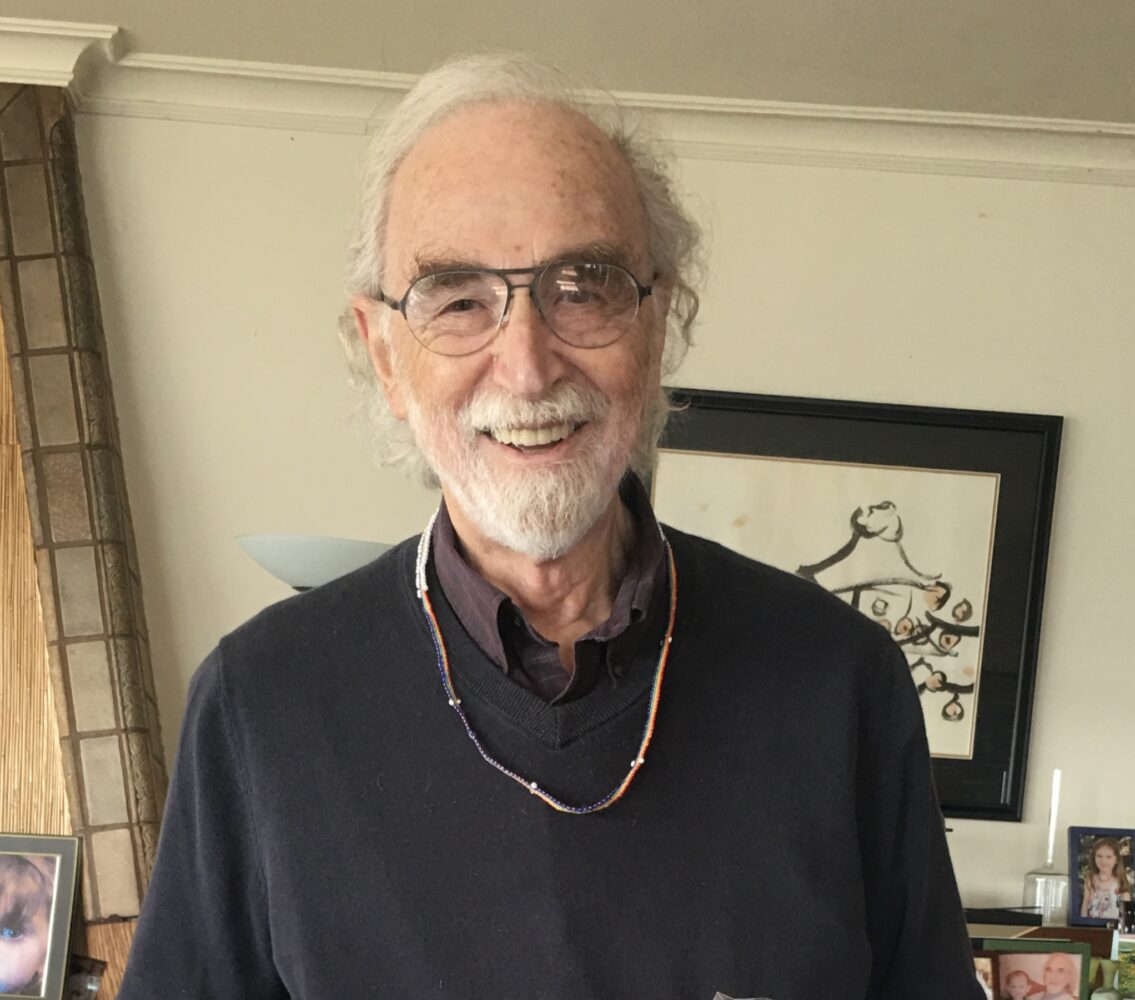
Dr. Gerald Pollack Professor of Bioengineering at the University of Washington in Seattle. He is a global leader in the fields of science and engineering, with research interests ranging from biological motion and cell biology to the interactions between biological surfaces and aqueous solutions. Dr. Pollack is the founder and Editor-in-Chief of the academic journal “Water: A Multidisciplinary Research Journal” and serves as the founder and chairman of the “Annual Conference on the Physics, Chemistry and Biology of Water,” held annually since 2005.
He has received numerous awards, including the University of Washington’s Faculty Lecturer Award (2008) and the NIH Director’s Transformative Research Award (2009). In Japan, his seminal work, “The Fourth Phase of Water: Beyond Solid, Liquid, and Vapor,” is published by Natural Spirit. https://www.pollacklab.org

Yasuyuki Nemoto, Ph.D. Director of the Life System Institute. He received his Doctorate in Science in the field of cellular and molecular biology from the University of Tokyo in 1988. In January 2002, he began working as the international secretary for the late Chairman Masaru Emoto. Over the following 13 years, he accompanied Chairman Emoto on international lecture tours, visiting more than 25 countries worldwide.
In October 2014, he delivered a keynote speech titled “Messages from Water and Science” at the International Water Conference. He organized the “Love and Gratitude Concert for Planet Earth” in July 2015 to honor Chairman Emoto’s legacy. In April 2016, he invited Dr. Pollack to Japan for a lecture in Tokyo, and in May of the same year, he held the “Ceremony to Offer Love and Gratitude to the Waters of the World” at Oshino, near Mt. Fuji. Currently, he serves as an advisor to the IHM General Research Institute and Office Masaru Emoto, and is a certified Grade 2 Electromagnetic Wave Surveyor. https://life-system-labo.com